



Introduction
A reliable network is essential for businesses that depend on fast internet connections, secure communication, and uninterrupted access to important applications. Whether you operate a small office or manage a large enterprise, choosing the right router can improve network performance, strengthen security, and support future business growth.
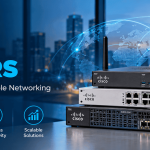
Cisco routers are widely used in enterprise networking because they provide advanced routing capabilities, flexible connectivity, and security features. These devices connect different networks and help businesses manage data traffic between offices, data centers, cloud services, and remote locations.
However, understanding Cisco routers prices, available models, and technical specifications is important before making a purchasing decision. Different Cisco router series are designed for different workloads, network sizes, and budgets.
What Are Cisco Routers?
Cisco routers are networking devices that connect two or more networks and direct data packets between them. They examine destination IP addresses and use routing information to determine where network traffic should go.
Unlike network switches, which primarily connect devices within a local area network, routers connect separate networks and provide communication between different locations.
Cisco routers are commonly used in office networks, enterprise campuses, branch locations, data centers, and telecommunications infrastructure.
Depending on the model and software configuration, they support advanced technologies such as Virtual Private Networks (VPNs), Software-Defined Wide Area Networking (SD-WAN), firewall functionality, and dynamic routing protocols.
These capabilities help organizations establish secure and efficient communication across their network infrastructure.
Why Are Cisco Routers Important for Businesses?
Modern businesses rely on network connectivity to access cloud applications, communicate with customers, transfer files, and manage daily operations.
An unreliable router can cause connection problems, slow application performance, and interruptions that affect productivity.
Cisco routers help businesses manage network traffic efficiently while providing tools for security, traffic prioritization, and network monitoring.
For example, companies operating multiple offices can use supported Cisco routers to establish encrypted connections between locations. This allows employees to access shared business resources securely.
Many Cisco enterprise routers also offer redundancy and failover capabilities. These features can help maintain connectivity when a network connection or supported hardware component fails.
By selecting the appropriate router, businesses can improve network reliability and prepare their infrastructure for future expansion.
Different Types of Cisco Routers
Cisco offers several router families designed for different networking environments. Understanding these categories helps businesses choose equipment that matches their technical requirements.
Cisco ISR (Integrated Services Routers)
Cisco Integrated Services Routers are designed primarily for enterprise branches, remote offices, and business networking environments.
Popular product families include the ISR 800, ISR 1000, ISR 2900, ISR 3900, and ISR 4000 Series.
These routers provide different combinations of Ethernet connectivity, WAN interfaces, VPN capabilities, and integrated network services.
The ISR 1000 Series is suitable for selected small branch deployments, while the ISR 4000 Series supports more demanding enterprise connectivity requirements.
Older ISR models remain available through secondary hardware markets, although buyers should verify their support status before deployment.
Cisco ASR (Aggregation Services Routers)
Cisco Aggregation Services Routers are designed for environments requiring higher routing capacity and advanced network services.
The Cisco ASR 1000 Series is commonly associated with enterprise WAN aggregation, internet edge connectivity, and service provider applications.
The ASR 9000 Series is designed for large-scale service provider networks requiring high port density and advanced routing capabilities.
These routers support demanding network environments where performance, availability, and traffic management are important.
Cisco Catalyst 8000 Edge Platforms
Cisco Catalyst 8000 Edge Platforms provide modern enterprise WAN connectivity and support SD-WAN deployments.
The Catalyst 8200 and 8300 families are designed for different branch networking requirements, while the Catalyst 8500 family supports higher-capacity enterprise edge environments.
These platforms offer flexible connectivity, routing capabilities, and security integration.
They are suitable for organizations modernizing their WAN infrastructure and connecting multiple locations to cloud services.
Cisco Industrial Routers
Cisco industrial routers are designed for challenging environments such as manufacturing facilities, transportation systems, energy infrastructure, and remote industrial locations.
Selected models support cellular connectivity, ruggedized hardware, and industrial communication requirements.
These routers help organizations connect operational technology equipment and remote systems where conventional office networking hardware may not be suitable.
Key Features of Cisco Network Routers
The capabilities of a Cisco router vary depending on its model, hardware configuration, and software licensing.
Understanding the most important features helps businesses make informed purchasing decisions.
Advanced Network Security
Security is a major consideration when connecting business networks to the internet or remote locations.
Many Cisco routers support security technologies such as IPsec VPNs, access control lists, and traffic filtering.
Selected platforms also integrate advanced security services that help protect business applications and network communications.
However, security capabilities and licensing requirements differ across router families.
High-Speed Data Routing
Cisco routers are available with different routing capacities and interface speeds.
Smaller branch routers may provide Gigabit Ethernet connectivity, while higher-end enterprise and service provider models support significantly faster network interfaces.
Businesses should consider actual forwarding performance, encrypted throughput, and expected traffic levels rather than relying only on advertised interface speeds.
VPN and Remote Connectivity
VPN functionality allows organizations to establish encrypted connections between offices, remote employees, and business resources.
Supported Cisco routers can provide site-to-site VPN connections and other secure WAN communication options.
This is particularly useful for businesses operating multiple branches that need controlled access to shared network services.
Scalability and Network Management
Some Cisco routers support modular hardware, additional network interfaces, and advanced management capabilities.
These features allow organizations to adjust network infrastructure as business requirements change.
Centralized management and automation capabilities on supported platforms can also simplify configuration and monitoring across multiple locations.
Cisco Routers Price: What Factors Affect the Cost?
Cisco routers prices depend on the router series, performance, hardware configuration, licensing, and product condition. Entry-level business routers generally cost less than high-performance enterprise and service provider equipment.
Understanding these factors helps buyers compare networking solutions accurately.
Router Model and Series
Different Cisco router families serve different network environments.
A compact branch router typically requires less processing capacity and fewer interfaces than a high-end aggregation router.
Consequently, enterprise platforms designed for demanding workloads usually have higher purchase prices.
Routing Performance and Throughput
Throughput is an important factor when comparing router costs.
Routers designed to process higher volumes of network traffic often require more powerful hardware.
Businesses should also evaluate performance when security features, encryption, and advanced routing services are enabled.
Hardware Interfaces and Expansion
The number and type of available interfaces can influence router pricing.
Models supporting additional WAN connections, fiber interfaces, modular components, or redundant power supplies may cost more.
These features can provide additional flexibility for organizations with complex networking requirements.
Software Licensing and Support
Some Cisco router capabilities require specific software licenses or subscriptions.
Advanced security, SD-WAN, network management, and support services can contribute to the total cost of ownership.
Before purchasing, organizations should verify which licenses are included and whether additional subscriptions are required.
New vs. Refurbished Cisco Routers
New Cisco routers may provide access to current hardware technologies and applicable manufacturer support.
Refurbished routers can offer significant savings, especially for organizations maintaining existing infrastructure.
However, buyers should examine hardware condition, warranty coverage, software entitlement, and end-of-support status.
Older equipment may have a lower initial price but create additional security and maintenance risks.
How to Choose the Right Cisco Router for Your Business
Selecting the right Cisco router requires evaluating network requirements, performance expectations, and long-term operating costs.
Understand Your Network Requirements
Start by identifying the number of business locations, connected users, internet connections, and applications.
Small offices may require basic routing and VPN connectivity, while larger organizations need advanced traffic management and network redundancy.
Understanding these requirements helps prevent unnecessary hardware purchases.
Evaluate Bandwidth and Performance
Choose a router that can support expected network traffic without becoming a bottleneck.
Consider internet bandwidth, application demands, VPN traffic, and peak usage periods.
Encrypted throughput is particularly important for businesses using secure connections between offices.
Check Compatibility With Existing Infrastructure
Before selecting a router, verify compatibility with existing switches, firewalls, WAN connections, and network management systems.
Some deployments may require specific transceivers, interface modules, software versions, or routing features.
Checking compatibility early helps reduce integration problems.
Consider Future Business Growth
Growing organizations should consider routers that provide suitable expansion capabilities.
A router with adequate performance capacity and flexible connectivity options can reduce the need for frequent hardware replacements.
However, businesses should balance future requirements against unnecessary upfront costs.
Benefits of Investing in Cisco Routers
Cisco routers provide networking capabilities for organizations of different sizes and industries.
Their routing features help businesses connect offices, cloud environments, and remote locations through structured network architectures.
Supported security functions can protect network communication, while traffic management features help prioritize important applications.
Enterprise models also provide options for high availability, network automation, and scalable connectivity.
The greatest advantage comes from selecting a router that matches actual business requirements, supported software capabilities, and long-term infrastructure plans.
Conclusion
Cisco routers play an important role in building secure, efficient, and scalable business networks. From small branch offices to large enterprise environments, different Cisco router families offer connectivity solutions for a wide range of applications.
Understanding router types, throughput requirements, security features, interface configurations, and licensing costs helps businesses make better purchasing decisions.
When comparing Cisco routers prices, organizations should consider total ownership costs rather than focusing only on the initial hardware price.
Choosing the right networking equipment can improve communication, support business growth, and provide a stronger foundation for long-term IT operations.
Frequently Asked Questions (FAQs)
What is the price of a Cisco router?
Cisco router prices vary depending on the model, series, routing performance, hardware features, software licenses, and condition. Entry-level routers are usually more affordable than high-performance enterprise models. Exact pricing should be checked against the required part number and configuration.
Which Cisco router is best for small businesses?
Cisco ISR 1000 Series and selected compact branch routers can be suitable for small businesses. The best choice depends on internet speed, connected users, VPN requirements, and security needs.
What is the difference between Cisco ISR and ASR routers?
Cisco ISR routers primarily support enterprise branch connectivity and integrated network services. Cisco ASR routers are designed for higher-capacity aggregation, enterprise edge, and service provider environments.
Do Cisco routers support VPN connections?
Yes. Many Cisco routers support VPN technologies such as IPsec, allowing businesses to establish encrypted connections between offices and remote networks. Available VPN capabilities depend on the router model and software configuration.
Are refurbished Cisco routers reliable?
Refurbished Cisco routers can be reliable when properly tested and maintained. However, buyers should verify hardware condition, warranty terms, software licensing, and security update availability before purchasing.
Can Cisco routers improve network performance?
Yes. An appropriately configured Cisco router can improve traffic management, network connectivity, and application prioritization. Actual performance depends on the router's capacity, network design, configuration, and available internet bandwidth.
How long do Cisco routers last?
Cisco routers can remain operational for many years, depending on usage, maintenance, and environmental conditions. However, businesses should also consider software support, security updates, and hardware replacement availability when evaluating service life.
What should businesses check before buying a Cisco router?
Businesses should evaluate routing throughput, network interfaces, VPN capabilities, security features, software licenses, compatibility, warranty coverage, and future expansion requirements. Comparing these factors helps identify the most cost-effective solution for long-term networking needs.